Designing Personal Systems: Building Frameworks for Deep Work
Have you ever ended a busy day feeling like you worked nonstop but accomplished very little? You’re not alone. The biggest challenge isn’t a lack of motivation—it’s the absence of a personal system that protects your focus.
Why Deep Work Feels So Difficult
Constant notifications, endless meetings, and multitasking make it hard to stay productive. Many people rely on willpower alone, but willpower fades. A well-designed personal system removes unnecessary decisions and creates an environment where focused work becomes natural.
A Real-Life Example
Consider Sarah, a freelance designer who struggled with missed deadlines. Instead of working longer hours, she created a simple routine: she blocked two distraction-free hours every morning, silenced notifications, and planned her top three priorities the night before. Within a month, she finished projects faster and had more free time without increasing her workload.
Common Myths About Deep Work
Many people believe:
- You need long, uninterrupted days to focus.
- Multitasking improves productivity.
- Productivity tools alone solve focus problems.
In reality, even 60–90 minutes of intentional, uninterrupted work often produces better results than several hours of distracted effort.
The Numbers Behind Focus
Research consistently suggests that knowledge workers lose significant time switching between tasks. Studies estimate it can take over 20 minutes to fully regain concentration after an interruption. By protecting focused work sessions, professionals often complete more meaningful work in less time. For freelancers and creators, stronger focus can translate into completing more client projects, improving work quality, and increasing income over time.
How to Build Your Personal Deep Work System
Step 1: Define Your Priority
Choose one meaningful task that creates the highest value each day.
Step 2: Schedule Focus Time
Block 60–90 minutes on your calendar and treat it like an important meeting.
Step 3: Remove Distractions
- Turn off notifications.
- Close unnecessary browser tabs.
- Keep your phone out of reach.
Step 4: Review Daily
Spend five minutes reviewing what worked and what needs improvement.
Helpful Tools
- Notion for planning projects.
- Todoist for managing daily tasks.
- Forest for staying focused.
- Google Calendar for time blocking.
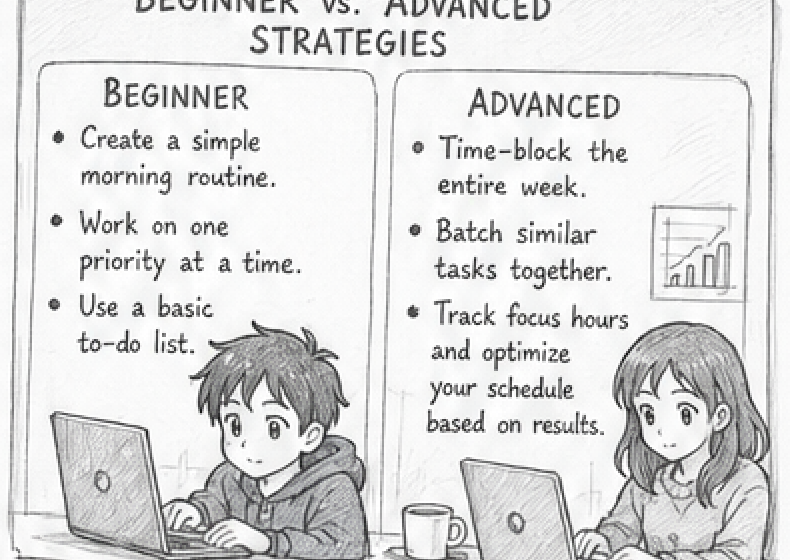
Beginner vs. Advanced Strategies
Beginners
- Create a simple morning routine.
- Work on one priority at a time.
- Use a basic to-do list.
Advanced Users
- Time-block the entire week.
- Batch similar tasks together.
- Track focus hours and optimize your schedule based on results.
Common Mistakes to Avoid
- Planning too many tasks.
- Checking emails constantly.
- Ignoring breaks.
- Chasing perfection instead of progress.
Practical Tips That Actually Work
- Start with just one focused session daily.
- Keep your workspace clean.
- Celebrate small wins to build consistency.
- Review your system weekly and adjust it as your responsibilities change.
Key Takeaways
Deep work isn’t about working harder—it’s about creating systems that make focus effortless. Small, consistent habits compound into remarkable results. Start by protecting just one hour of distraction-free work every day, refine your personal framework over time, and you’ll build a sustainable productivity system that delivers better results with less stress.
The best time to design your personal system is today. Block your first deep work session, eliminate distractions, and experience the difference focused work can make.